Technology
Guided Implant Surgery
Computer-planned implant placement using 3D imaging and a custom surgical guide for precision, safety, and predictability.
Clinical overview
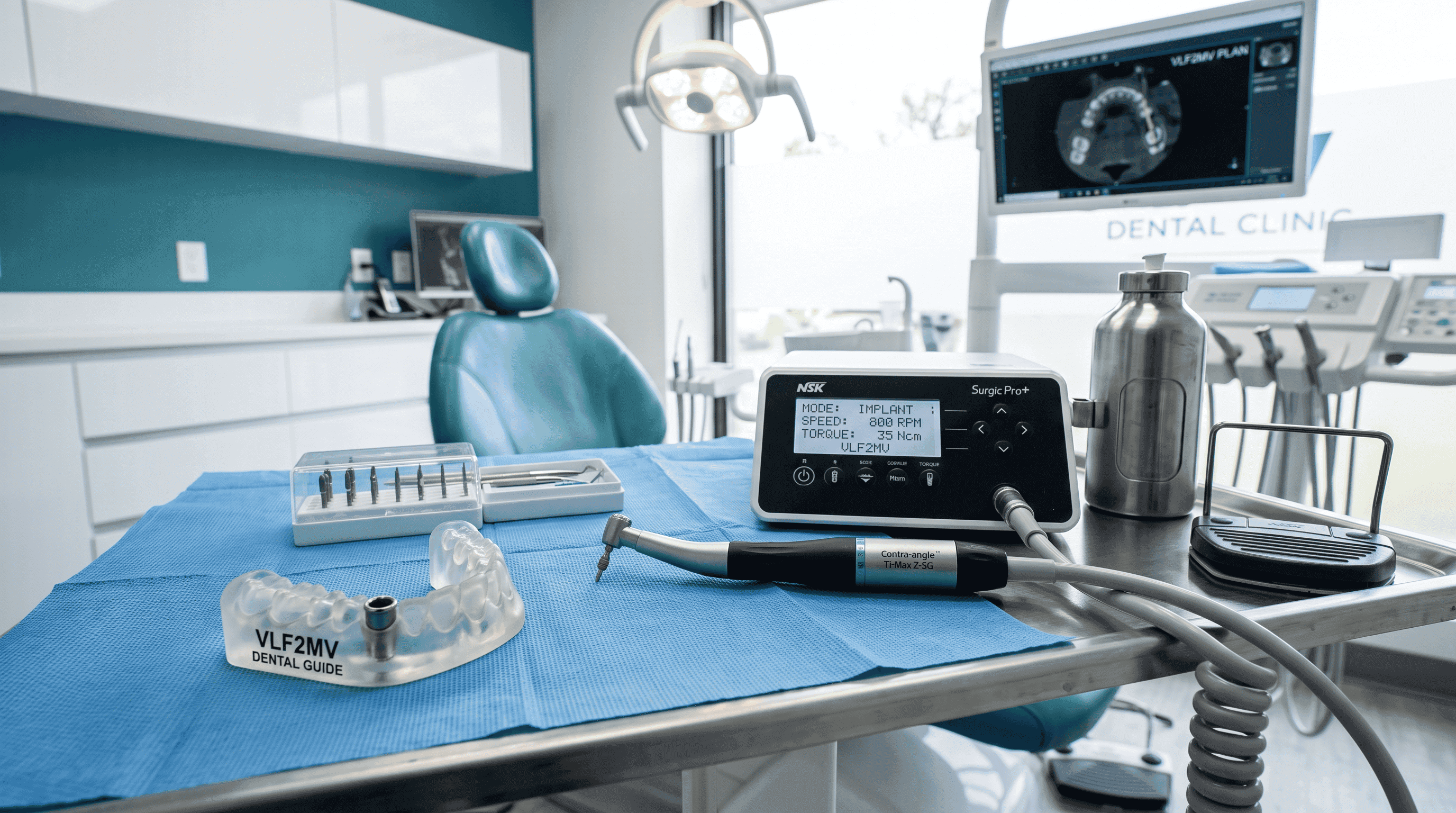
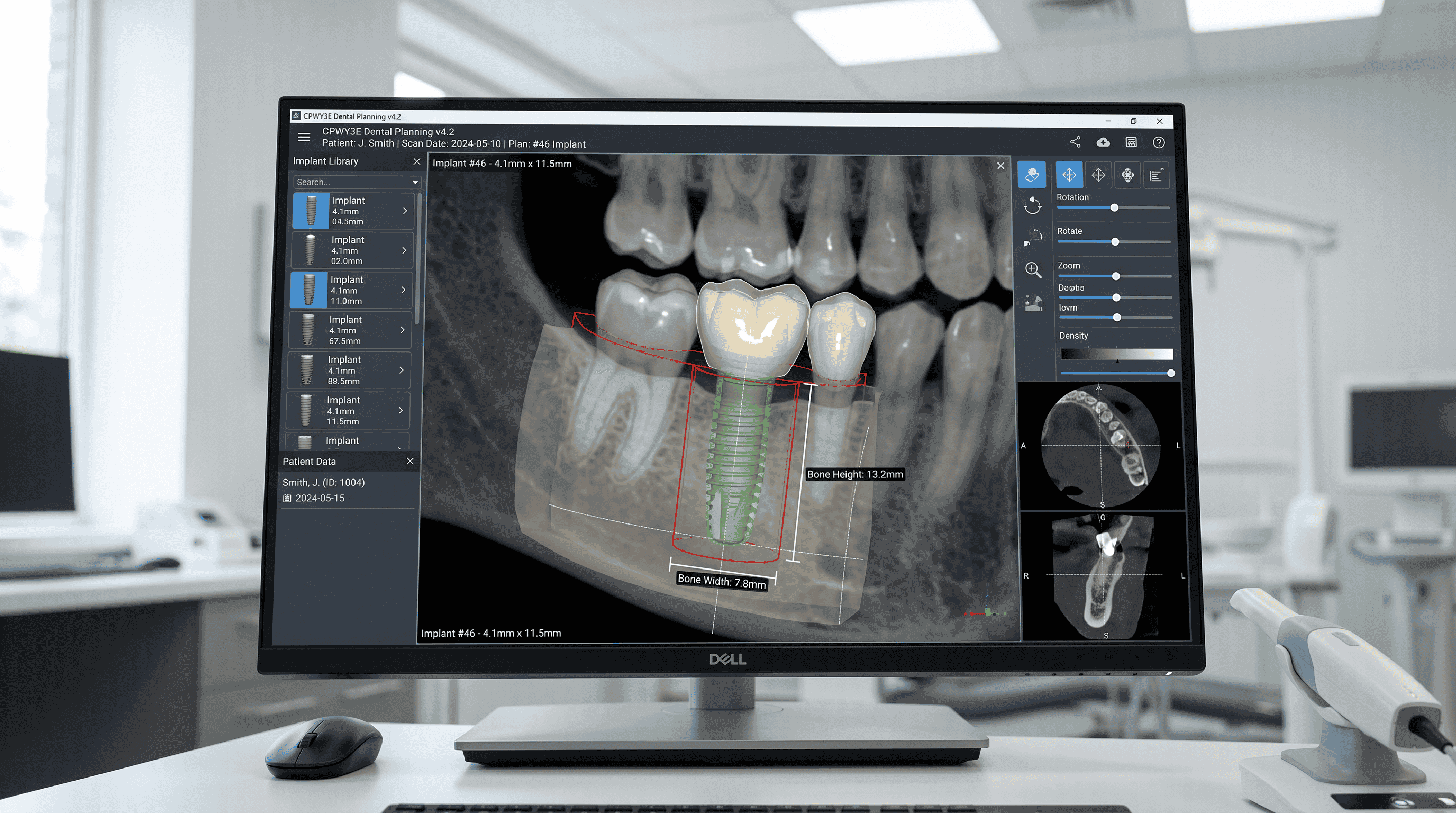
Guided implant surgery uses your CBCT volume and digital tooth scan to plan the exact position, angulation, and depth of each implant in software — then transfers that plan to the mouth with a custom surgical guide. The guide seats on your teeth or soft tissue and contains metal sleeves that constrain the drill path, so the implant is placed where the restoration needs it to be, not merely where bone happens to feel accessible freehand.
The philosophy is restorative-driven implantology: we start with the ideal tooth position and work backwards to the implant. That reduces the risk of implants that are well-integrated in bone but poorly placed for chewing, aesthetics, or hygiene. In thin bone or near nerves and sinuses, guidance adds a measurable safety margin.
Guided surgery does not make implants risk-free, and not every case requires a guide. Fully guided, partially guided, and freehand approaches each have indications. Our implant team selects the protocol based on anatomy, number of implants, whether immediate loading is planned, and mouth opening or access constraints.
When guides are used, they are typically 3D-printed from the merged digital dataset. On the day of surgery, the guide is tried in for fit stability before drilling begins. Final torques, soft-tissue handling, and prosthetic decisions still rely on surgical skill — the guide is a precision instrument, not an autopilot.
From scan to guided placement
- 1
Data capture
CBCT maps your bone; an intraoral scan (or scan of a model) captures tooth and soft-tissue surfaces. Both datasets are aligned in planning software.
- 2
Virtual implant placement
We position virtual implants relative to the planned crown or bridge, nerve canals, sinus floors, and available bone — adjusting diameter and length as needed.
- 3
Guide design & fabrication
A surgical guide is designed with drill sleeves matching the plan, then manufactured (typically 3D-printed) and verified before surgery.
- 4
Guided surgery
At surgery, the guide directs osteotomies and implant placement according to the digital plan, with clinical verification at each step.
Clinical applications
- Single-tooth implants in aesthetic zones
- Multiple implants for bridges or partial dentures
- Full-arch implant concepts including All-on-4 style protocols when indicated
- Sites near the inferior alveolar nerve or maxillary sinus
- Cases where prosthetic emergence profile is critical
Clinical benefits
- Implant positions planned for the final tooth, not only for available bone
- Reduced risk of encroaching on nerves or sinus when anatomy is tight
- Often more efficient surgery with fewer intraoperative surprises
- Better communication — you can see the plan before the day of surgery
- Facilitates coordinated restorative work after healing
What to expect
Planning visits include imaging, scanning, and a discussion of the virtual plan. Fabricating a guide adds a laboratory or in-house manufacturing step before surgery.
Surgery itself may feel similar to conventional implant placement from your perspective — local anaesthesia, sterile protocol, and post-op instructions — with the added use of the guide during drilling.
After placement, healing time still follows biological rules. Guides improve positional accuracy; they do not skip osseointegration. We schedule reviews to confirm healing before the final crown or prosthesis.
FAQs
Guided surgery improves positional accuracy in many cases, but freehand or partially guided approaches remain appropriate when anatomy is favourable, access is limited for a guide, or the clinical situation demands flexibility. We recommend guidance when it meaningfully improves safety or the prosthetic result.
Related services
Related technologies
Explore how other digital tools at Implant Square Dental work together in your care plan.
Dental CBCT & 3D Imaging
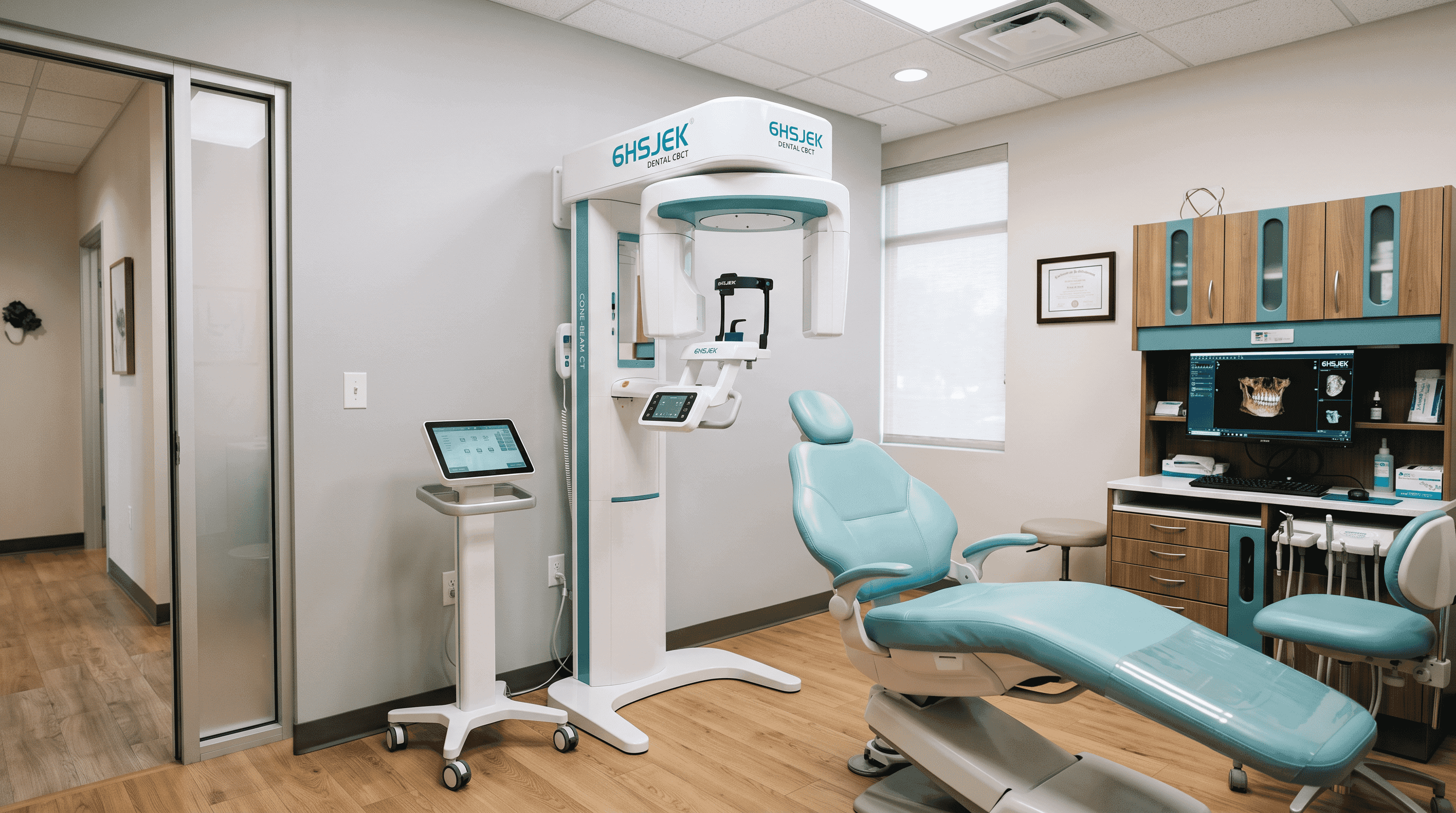
In-house cone-beam CT that creates a detailed 3D view of your teeth, jaws, bone, and nerves — recommended only when it can meaningfully improve diagnosis or treatment planning.
Learn more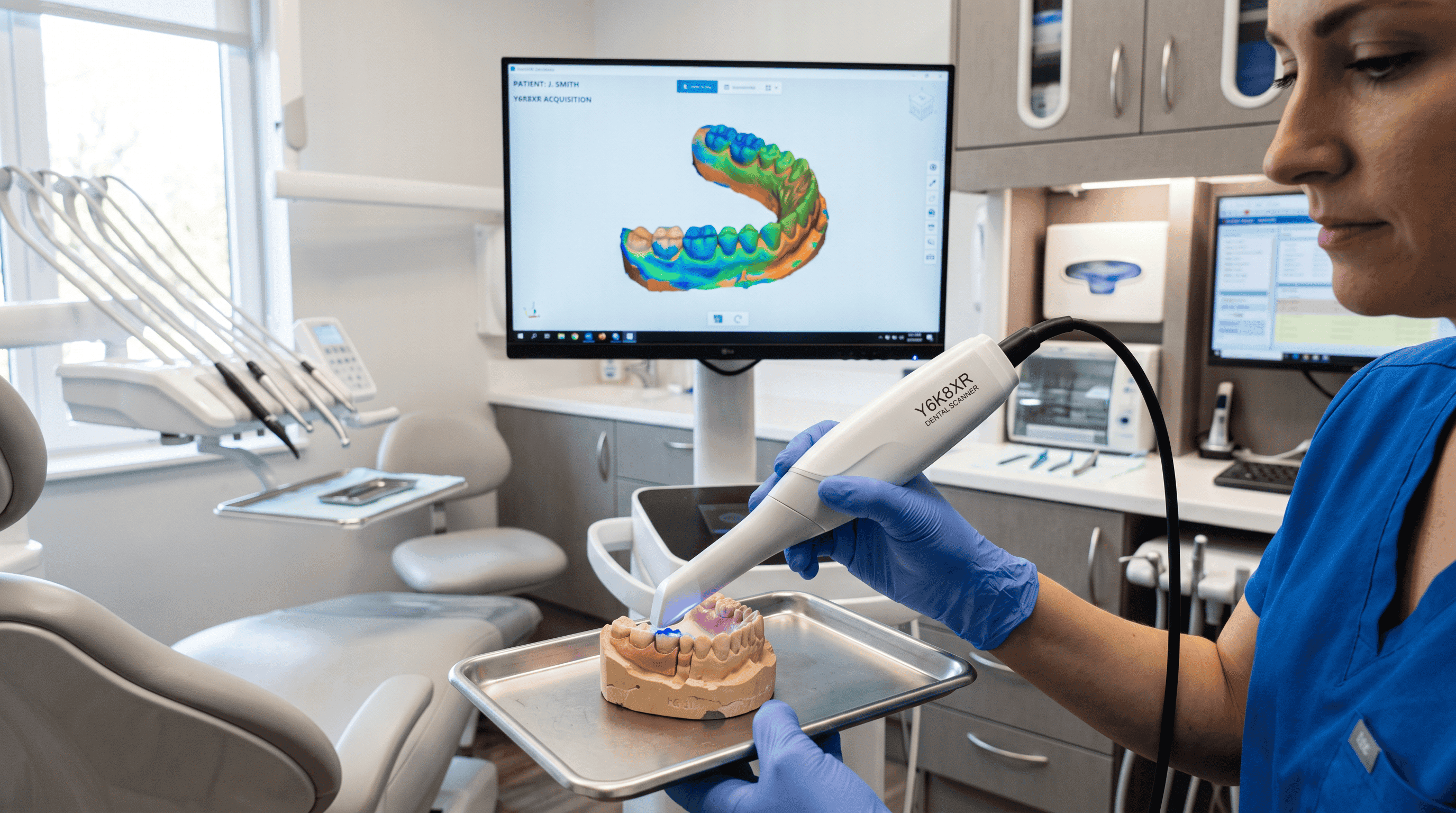
Intraoral Scanner
A handheld digital wand that captures precise 3D models of your teeth — often replacing traditional putty impressions.
Learn more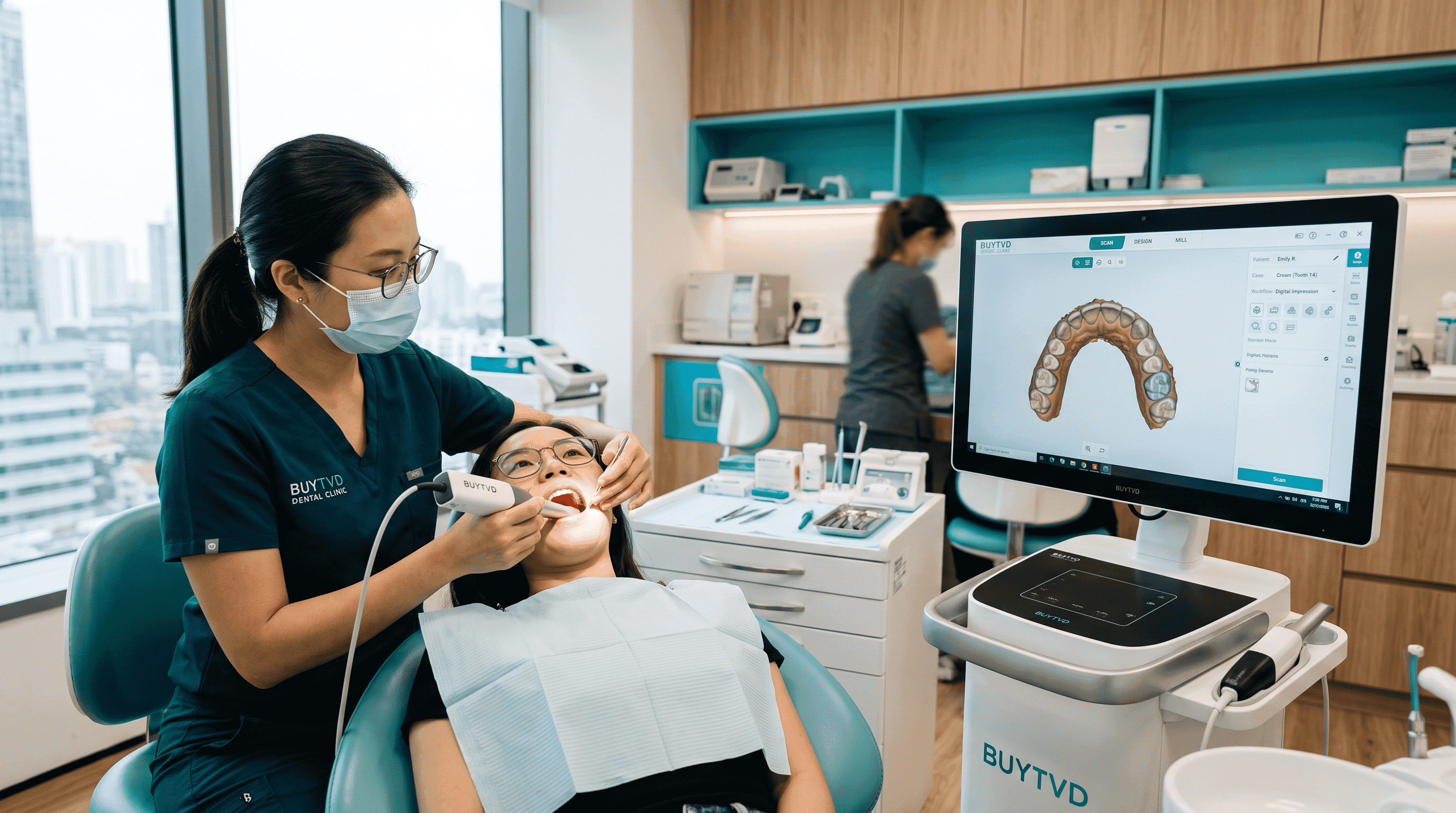
Digital Dentistry
An integrated digital workflow — from diagnosis and scanning to planning and restoration — that connects every step of your care.
Learn moreReady to experience digitally planned care?
Book a consultation at our Ecoworld, Bellandur clinic. We will recommend only the technology that improves your diagnosis, comfort, or outcome.